
Helpful Articles
How AI Is Transforming Transport Planning (Without Replacing Planners)
AI is becoming a core part of modern transport management systems (TMS), helping operators improve route optimisation, load planning, and operational efficiency. AI doesn’t replace planners — it works with them.
Why the Future of UK Transport Depends on Keeping Humans in the Loop
AI is rapidly transforming how UK transport operations plan, optimise, and deliver work. But as awareness of AI and new AI functionality is introduced, one question keeps coming up.
Will AI replace transport planners?
The short answer is no. The more accurate answer is that AI is changing how transport planners work, supporting decisions, enabling faster planning, and more efficient operations – while still relying on human expertise at every critical stage.
In this article, we explore how AI is influencing UK transport operations, where concerns are coming from, and why the most successful operators are focused on keeping humans firmly in the loop.
1. How Is AI Influencing Transport Teams Today?
AI in transport isn’t about autonomous decision‑making without oversight. In reality, it’s being used to support planners with data‑driven insights that would otherwise take hours, or even days, to compile.
Today, AI is commonly used to:
- Analyse large volumes of historical transport data
- Identify inefficiencies and recurring issues across routes and fleets
- Predict likely delays based on traffic, weather, and network conditions
- Automate manual tasks
- Support compliance with drivers’ hours and regulations
Rather than replacing planners, AI acts as a decision‑support tool, allowing teams to focus on more pressing work such as exception handling, customer communication, and operational strategy.
2. What Is AI‑Powered Route Optimisation?
One of the most talked‑about applications of AI in transport is route optimisation.
Traditional route planning relies on static rules and manual adjustments. AI‑powered route optimisation goes further by:
- Factoring in delivery windows, vehicle types, and driver constraints
- Learning from past outcomes to continuously improve recommendations
- Adjusting routes dynamically for different work types, locations, and varying factors, when planning routes
Importantly, AI does not simply “decide and deploy”. Human planners review, validate, and adjust suggested routes – applying their local knowledge, customer insights, and operational understanding that AI alone cannot replicate.
AI-powered optimisation doesn’t just improve routes – it also enhances load building, automatically grouping jobs into the most efficient vehicle plans.
The result?
Better routes, improved vehicle utilisation, loads planned with fewer errors and greater consistency.
Discover how Route Optimisation can add more power into your operations
Learn more about integrated, AI-powered Load Building and Route Optimisation in the Mandata TMS software
3. Market Concerns: Will AI Replace Transport Planning Teams?
As with any new technology, AI has sparked understandable concern across the industry.
Common worries include:
- “AI will take over planning roles.”
- “Years of experience will become obsolete.”
- “Human judgment will no longer be valued.”
- “Decisions will be made by algorithms we don’t fully control.”
These concerns are not unfounded – but they often stem from a misunderstanding of how AI is deployed in real‑world transport operations.
AI lacks:
- Contextual awareness of customer relationships
- Accountability for operational outcomes
- The ability to handle complex exceptions and trade‑offs
- Inability to account for conditions outside the scope of the task it has been designed to perform
Transport planning is rarely a perfect, rule‑based problem. It requires judgement, flexibility, and experience – qualities that remain uniquely human.
Nor does it fit all business requirements. What if you’re delivering frozen and chilled loads? Can AI Optimised Load Building handle the specific workflow required and the trailer’s compartment configuration (horizontal v vertical split) and handle loading rules?
For Bulk Tankers to get more from route optimisation, how does AI handle unpredictable waste collection volumes?
For these questions, having an experienced set of eyes, from the Transport Planner, is irreplaceable.
4. The Optimistic View: AI as a Planner’s Co‑Pilot
A more realistic, and increasingly common view of AI is as a co‑pilot, or second pair of hands, not a replacement.
Used responsibly, AI:
- Reduces planning pressure and manual workload for planners
- Removes repetitive manual tasks
- Improves planning consistency across teams
- Helps new planners become productive, faster
- Frees up time for proactive, strategic thinking
The result is faster planning, fewer errors, and more consistent outcomes across the team.
For experienced planners, AI doesn’t replace their expertise – it amplifies it.
Instead of spending hours building and rebuilding transport plans, planners can focus on:
- Managing exceptions
- Improving service levels
- Analysing performance
- Collaborating with customers and drivers
Plan Faster. Load Smarter. Deliver Better.
Explore how Mandata’s AI-powered transport management system helps reduce empty miles, improve utilisation, and give your planners the tools to perform at their best.
5. Realistic Outcomes of Adopting AI in Transport Operations
When AI is implemented with humans firmly in the loop, transport businesses typically see:
- Faster planning cycles
- Improved vehicle utilisation
- Reduced empty miles
- Better on‑time performance
- Greater planner satisfaction and retention
Crucially, the best results come from collaboration, not automation without oversight.
AI provides recommendations.
Humans make the final call.
This model ensures accountability remains clear, decisions remain explainable, and trust is maintained across operations.
6. How AI Actually Helps Transport Planners Day‑to‑Day
In practical terms, AI supports planners by:
- Highlighting potential issues before they escalate
- Suggesting optimal route structures based on constraints
- Automatically flagging compliance risks
- Reducing time spent on manual data checks and what‑if scenarios
Rather than removing control, AI gives planners more visibility, better options, and greater confidence in their decisions.
This is what “human‑in‑the‑loop” AI truly means:
technology that enhances human judgement instead of replacing it.
Conclusion: The Future of Transport Planning Is Human + AI
AI is not here to replace transport planners.
It’s here to help them do their jobs better.
How Mandata Supports AI-Driven Transport Planning
In Mandata TMS, AI-powered optimisation is built directly into the planning workflow – helping transport teams build better loads, optimise routes, and make faster decisions, all within one system.
In a complex, regulated, and customer‑driven industry like UK transport and logistics, human experience, customer and geographic knowledge, accountability, and decision‑making remain irreplaceable.
The future belongs to transport teams that embrace AI as a tool – while keeping humans at the heart of every operational decision.
Because the smartest transport operations won’t be AI‑driven or human‑only.
They’ll be human-led, AI-enabled – combining experience with intelligent optimisation to deliver better results, faster.
Take Control of Your Transport Operations
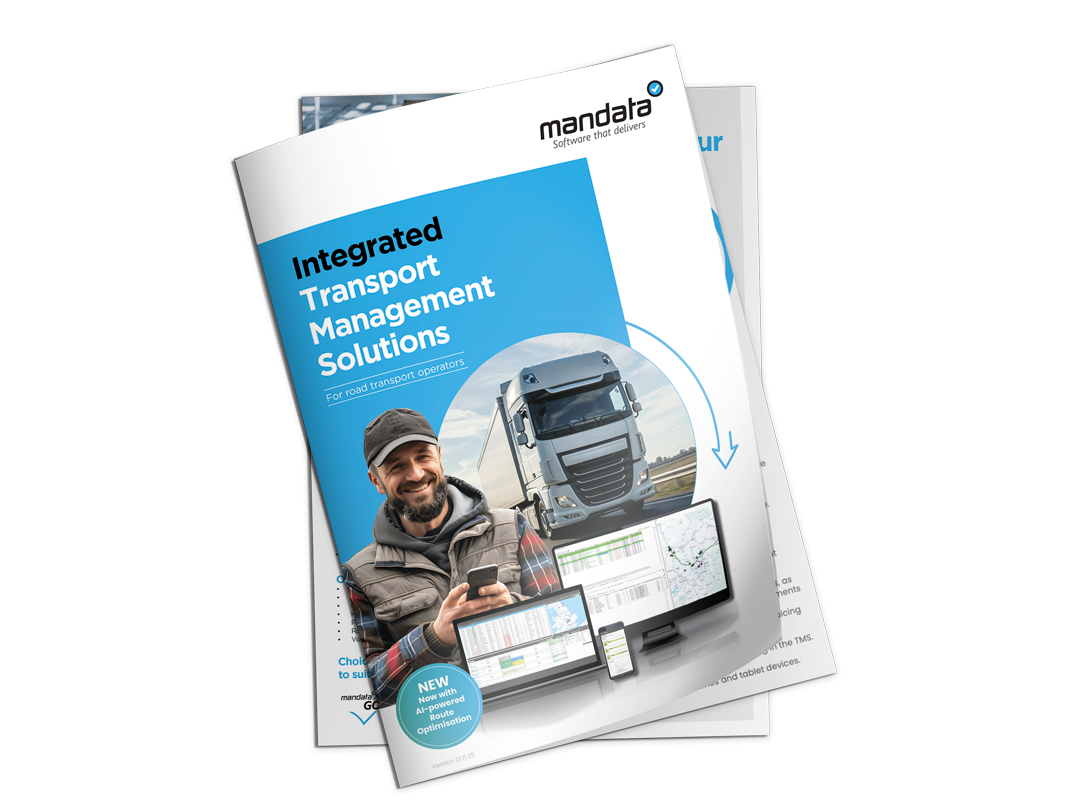
Discover how to reduce empty miles, improve fleet efficiency, and stay compliant with a purpose-built TMS
FAQs: AI in transport
AI in transport planning uses data and algorithms to optimise routes, loads, and scheduling decisions, helping planners work more efficiently.
No — AI supports planners by handling complex calculations, while humans remain responsible for decisions and exceptions.
Unlock Better Transport Planning with AI — Without Losing Control
See how Mandata helps planners work smarter with AI-driven route optimisation and load building, while keeping every decision firmly in human hands.
Download the Mandata brochure to see how intelligent optimisation supports your planners, improves efficiency, and delivers more consistent transport operations.