
Helpful Articles
7 Causes of Fragmented TMS Workflows in Logistics (and How to Fix Them)
Fragmented logistics operations are one of the biggest hidden barriers to efficiency across modern transport businesses. From disconnected systems to duplicated data, many hauliers struggle to maintain visibility and control across their workflows.
But what’s really behind logistics software fragmentation—and more importantly, how can it be solved? In this guide, we explore the seven most common causes of fragmented transport management workflows, and how an integrated transport management system (TMS) can transform the way your operation runs.
What is Logistics Software Fragmentation?
Logistics software fragmentation occurs when multiple systems, processes, and data sources operate in silos rather than as a unified whole. This creates inefficiencies across planning, execution, communication, and billing.
For transport managers, fragmented systems often mean:
- Limited visibility across operations
- Increased manual data entry
- Errors in planning and invoicing
- Delayed decision-making
A fully integrated transport management system replaces this fragmentation with a centralised platform that connects every stage of your workflow.
Take Control of Your Operations
Want to eliminate data silos and improve efficiency?
1. Multiple Disconnected Systems
One of the leading causes of logistics workflow fragmentation is relying on separate tools for planning, tracking, invoicing, and reporting.
These disconnected systems don’t communicate effectively, leading to:
- Data duplication
- Manual reconciliation
- Increased risk of human error
A unified TMS, such as the Mandata Transport Management Software (TMS) ensures seamless data flow between departments, removing inefficiencies and saving valuable time.
Simplify Your Tech Stack
Discover how a single TMS can replace multiple systems.
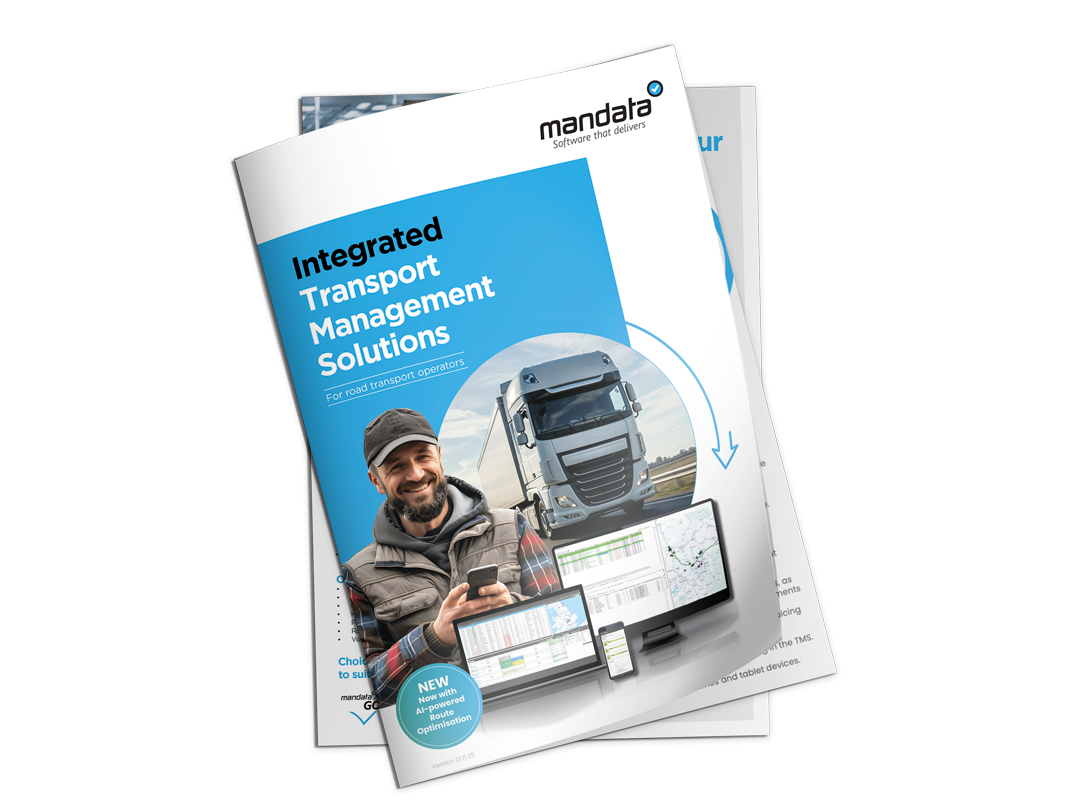
👉 Get your Mandata TMS brochure here, and connect your operations with one system
2. Lack of Real-Time Data Visibility
Without real-time visibility, transport managers struggle to make informed decisions. Fragmented systems often delay updates, meaning you’re working with outdated information.
Key challenges include:
- Inaccurate ETAs
- Poor customer communication
- Missed optimisation opportunities
Modern transport management systems, such as the Mandata TMS software, provide real-time tracking and reporting, enabling proactive decision-making across your entire operation.
Gain Full Visibility
See how real-time insights transform logistics operations.
👉 Download your Mandata brochure, and start gaining greater insights over your operations
3. Manual Processes and Workarounds
Many logistics companies rely on spreadsheets and manual processes to bridge the gaps between disconnected systems.
This leads to:
- Time-consuming admin tasks
- Increased likelihood of errors
- Reduced scalability
Integrated logistics technology like the Mandata TMS removes the need for manual workarounds by automating workflows from job creation through to invoicing.
Automate Your Workflows
Reduce admin and improve accuracy with automation.
4. Poor Integration Between Systems
Even when companies invest in multiple software tools, a lack of proper integration often results in fragmented logistics operations.
Without integration:
- Data cannot flow freely
- Systems require constant manual updates
- Reporting becomes inconsistent
A well-designed Mandata Transport Management System, integrates with key systems such as telematics, accounting software, and customer platforms, ensuring seamless operations.
Connect Your Systems
Learn how integration improves operational efficiency.
5. Siloed Departments
Fragmentation doesn’t just occur in systems—it also happens across teams. Planning, operations, finance, and customer service often operate independently.
This results in:
- Communication breakdowns
- Delayed responses to issues
- Disjointed customer experiences
An integrated transport management platform, like the Mandata transport software, aligns departments, enabling better collaboration and shared visibility across workflows.
Unite Your Teams and Departments
Break down silos and streamline communication.
6. Inefficient Billing and Financial Processes
Disconnected workflows often create inconsistencies between operational data and financial systems.
Common issues include:
- Delayed invoicing
- Revenue leakage
- Disputes with customers
A unified TMS, like the Mandata TMS software, ensures that billing is directly linked to operational data, enabling faster, more accurate invoicing and improved cash flow.
Improve Cash Flow
See how integrated billing accelerates revenue.
👉 Download the free Mandata Transport Management System brochure
7. Lack of Scalable Logistics Technology
As logistics businesses grow, fragmented systems struggle to keep up with increased complexity. What once worked for a small operation becomes inefficient at scale.
Challenges include:
- Limited flexibility
- Difficulty adapting to new requirements
- Increased system maintenance
Scalable transport management systems such as Mandata, provide the flexibility needed to grow while maintaining efficiency and control.
Future-Proof Your Operation
Build a scalable logistics foundation for growth.
How Integrated TMS Software Solves Fragmentation
An integrated transport management system brings together planning, execution, tracking, and billing into a single platform.
Key benefits include:
- End-to-end visibility across operations
- Improved logistics workflow optimisation
- Reduced manual processes
- Faster, more accurate decision-making
- Enhanced customer service
By eliminating fragmentation, logistics businesses can operate more efficiently, reduce costs, and improve profitability.
Fragmented logistics operations don’t just slow your business down—they quietly erode profitability, visibility, and customer service. As this guide highlights, the root causes of logistics software fragmentation often stem from disconnected systems, manual processes, and siloed teams.
The solution lies in bringing everything together with a fully integrated transport management system. Mandata TMS is purpose-built for haulage and logistics businesses, unifying planning, execution, tracking, and billing into one seamless platform.
By replacing fragmented workflows with a single source of truth, Mandata enables transport managers to reduce admin, improve accuracy, gain real-time visibility, and scale with confidence—making it the ideal choice for operators looking to optimise performance and future-proof their operations.
Cut Costs. Boost Efficiency. Stay Compliant.
See how Mandata TMS helps you reduce empty miles and maximise fleet performance across every job
Logistics software fragmentation refers to the use of disconnected systems and processes that do not share data effectively, leading to inefficiencies across operations.
Many logistics businesses adopt multiple tools over time, which fail to integrate properly, creating silos in data, processes, and departments.
A TMS centralises logistics workflows into one platform, enabling seamless data flow, automation, and real-time visibility.
Optimised workflows improve efficiency, reduce costs, enhance customer service, and enable better decision-making.
Key features include real-time tracking, integration capabilities, automated billing, centralised data management, and scalability.
Integration ensures that data flows seamlessly between systems, reducing manual input, errors, and delays across the supply chain.